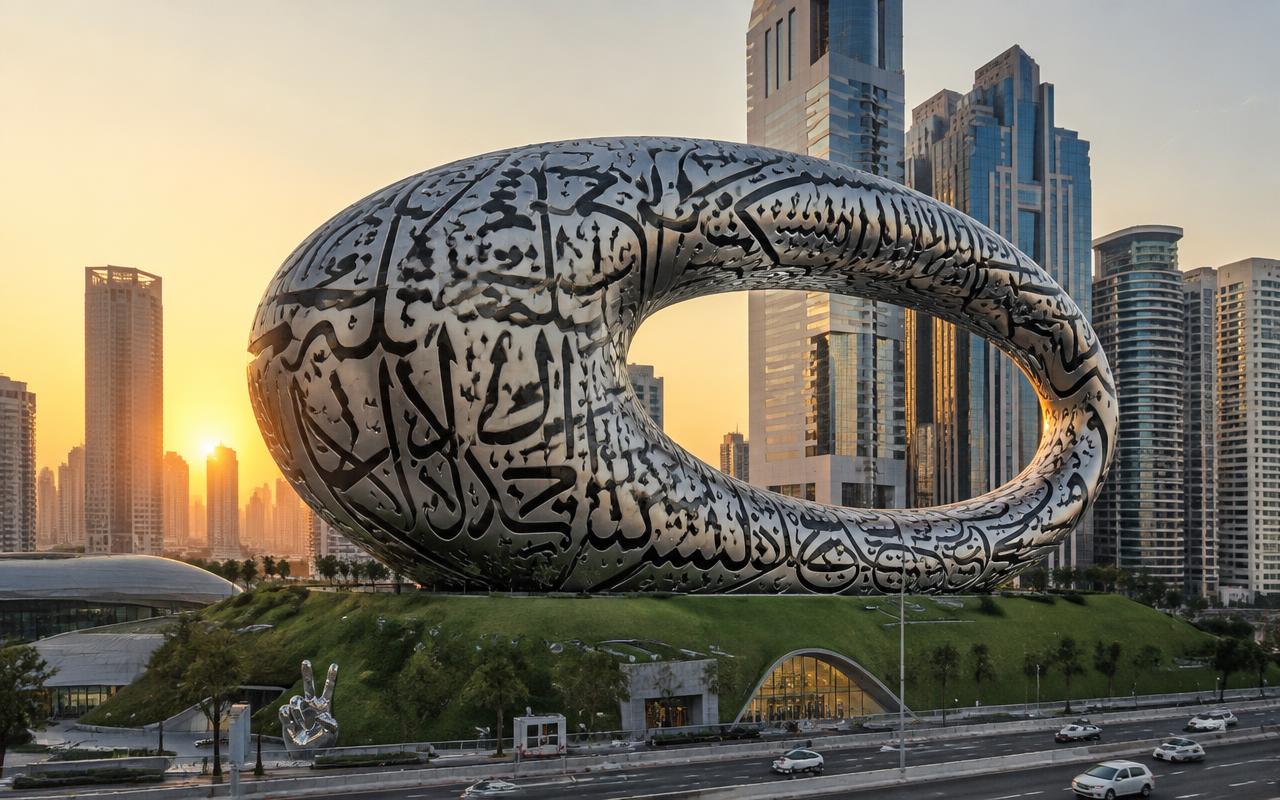
Your visit, from arrival to the final gallery
Start by finding the entrance and having your booking confirmation ready, rather than joining whichever queue looks most confident. Staff direct visitors through admission checks and towards the experience. Leave a buffer before your slot, especially if you are arriving by taxi from Downtown Dubai. Your booking confirmation should explain the current arrival requirements.
The opening stages establish a fictional future through briefing spaces, screens and a simulated journey. This is immersive storytelling, not a conventional museum where you wander between dusty objects and pretend to understand pottery.
Once upstairs, the route generally moves through themed environments exploring life beyond Earth, ecological challenges and personal wellbeing. Later displays bring the focus towards technologies and possibilities closer to today. Expect a mixture of watching, listening and interacting, rather than constant hands-on activities. Installations and access arrangements can change, so treat online walkthroughs as a flavour, not a guaranteed running order.
Build a realistic schedule, not a speedrun
For planning beyond the headline visit duration, think in three parts: arrival logistics, the exhibition route and decompression afterwards. Give the galleries roughly two hours if you enjoy reading and listening, then allow roughly another hour across entry, browsing and a drink. This is a planning estimate, not a promised admission window.
Some introductory sequences move groups together, so you cannot necessarily sprint ahead or retrace every section. Ask staff before skipping something you might want to revisit.
If you have dinner reservations or a Burj Khalifa ticket afterwards, leave a comfortable gap. Being physically near Downtown does not mean Sheikh Zayed Road will cooperate. Families should also factor in toilet stops before starting, rather than discovering an urgent situation halfway through a fictional space mission.
Ticket checks and sensible ways to save
Before paying for Museum of the Future tickets, compare the official booking calendar with any authorised reseller you are considering. Look at the final checkout total, date, entry window and cancellation terms. A cheaper listing is not useful if it is unavailable on your travel day or bundles in something you do not want.
Check current eligibility rules for young children, people of determination and accompanying carers. Concessions may require documentation, advance arrangements or a separate booking even where admission is complimentary. Do not assume a child can simply walk in alongside an adult ticket holder.
For savings, check whether a genuine resident promotion, payment-card benefit or attraction pass applies to your dates. Compare a bundle against the individual attractions you would actually visit. There may be no meaningful discount on your preferred slot, and booking direct can be worth it for clearer support. Avoid social-media ticket sellers promising miraculous availability.
Accessibility, sensory needs and choosing the right ages
The futuristic setting can involve changing light, sound, enclosed-feeling spaces and screen-based sequences. Visitors sensitive to sensory stimulation should contact the museum before booking to ask about current effects, quieter visiting conditions and whether sections can be bypassed. Quiet and dim are not always the same thing.
For wheelchair users or anyone with limited mobility, confirm lift access along the full exhibition route, seating opportunities, accessible toilets and mobility-equipment arrangements. Ask specifically about any transfers or evacuation considerations relevant to you. A spectacular building is not a substitute for practical access information.
School-age children who enjoy space, inventions and imaginative questions are likely to get more from the narrative than toddlers. Younger visitors may enjoy the visuals but struggle with listening sections. Check current age rules for dedicated children's activities and whether adults must remain present. Teenagers interested in design or science may engage more if you frame it as a discussion about possible futures, not a textbook brought to life.
Food stops and nearby places worth combining
For a straightforward meal, look around Emirates Towers before committing to another journey. DIFC offers a wider restaurant choice, from casual cafés to polished dining rooms where your trainers may feel underqualified. Check menus, booking requirements and dress codes directly, particularly for an evening reservation.
If you need a snack during the visit, confirm current on-site café access and outside-food rules. Parents with baby food or visitors with medical dietary needs should ask about exceptions in advance.
For a culture-focused pairing, consider galleries in DIFC, checking individual opening times and exhibition dates. Dubai Frame in Zabeel Park makes a contrasting stop for city views and Dubai's development story, though it involves another journey and some outdoor exposure. Dubai Mall works better when you want extensive food choices and another indoor attraction. Choose one substantial add-on rather than attempting to collect half the city before sunset.
Creator tips beyond the standard exterior shot
Build your video around a question, such as whether the experience feels more like a museum or a film set. Capture a short arrival sequence, architectural details and your reaction afterwards, rather than uploading every reveal. Leaving some surprises intact is kinder to future visitors and usually makes a tighter edit.
Inside, expose for bright screens rather than your face, and brace your phone for low-light clips. Avoid flash and watch reflections in glossy surfaces. Wide shots can accidentally feature other visitors prominently, so wait for space or choose tighter compositions.
Ask staff about current filming restrictions before recording. Tripods, lighting equipment, commercial shoots and sponsored content may need permission beyond ordinary visitor photography. A ticket is not automatically a production permit. Record your spoken review somewhere quieter afterwards, rather than competing with exhibition audio like an enthusiastic airport announcement.
Who will love it, and two indoor alternatives
Museum of the Future is strongest for architecture fans, speculative-design enthusiasts and visitors who enjoy atmospheric storytelling. Couples and curious teenagers can get plenty to discuss afterwards. Anyone expecting exhaustive scientific explanations or nonstop interactive games should adjust expectations.
Compared with The Green Planet in City Walk, this is a more conceptual experience. The Green Planet centres on observing living plants and animals in an indoor tropical environment, making it a stronger choice for nature-focused visitors. Animal sightings and behaviour are not scripted.
Compared with Museum of Illusions in Al Seef, Museum of the Future offers a larger narrative journey. Museum of Illusions focuses more on optical puzzles and playful perspective photographs. Pick it for a lighter, photo-led outing. Pick Museum of the Future when the building, mood and big questions are part of the attraction.