Food & Venues · 15 November 2026
Dubai was Russo’s first international stop. Here is how its full kitchen model works
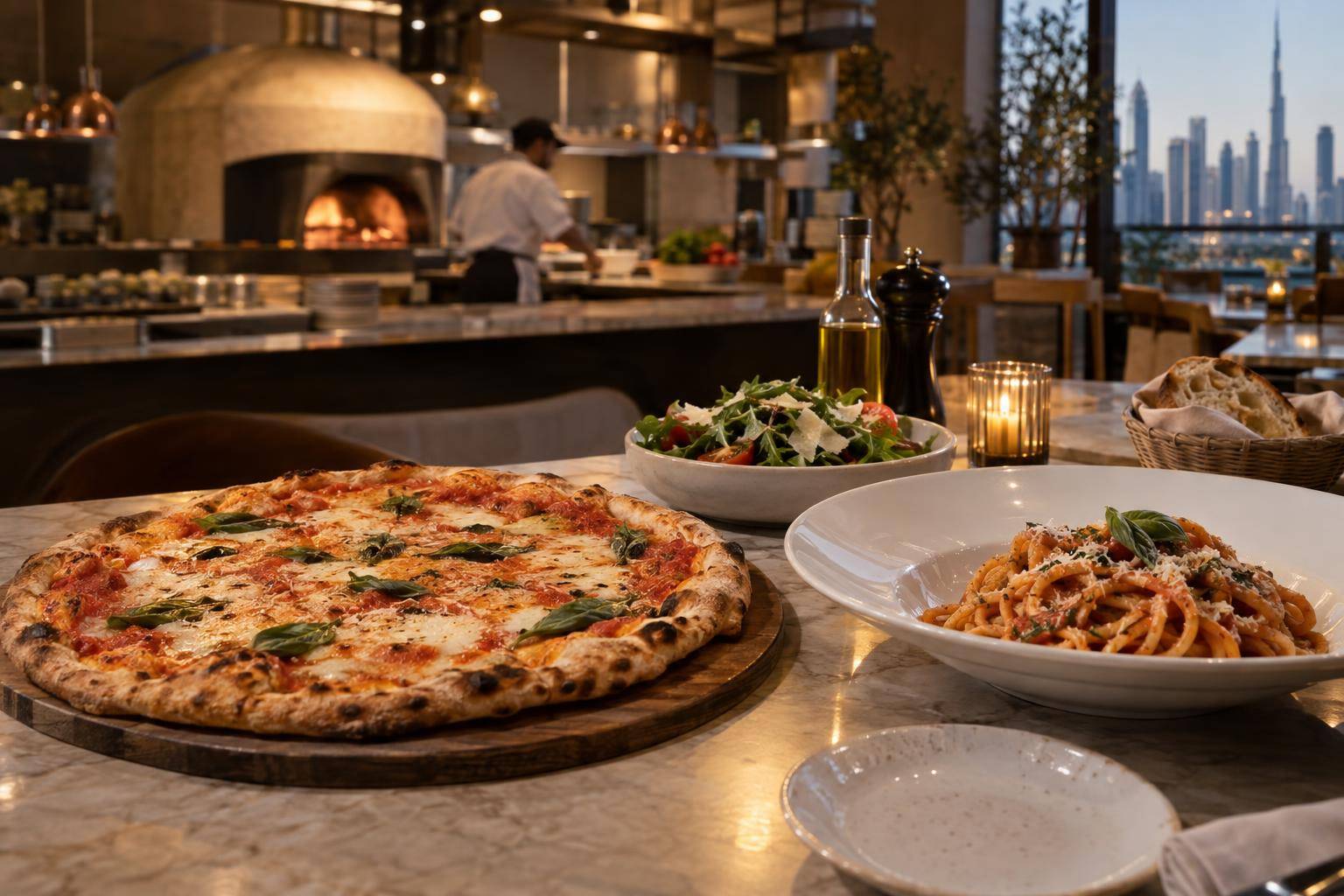
Russo’s, the pizza and Italian restaurant concept founded by Chef Anthony Russo, identifies Dubai as the location of its first international restaurant, which opened in 2013. In a franchise overview marked as updated in November 2026, the company explains the food, service and ownership model behind that expansion, without announcing a new UAE opening.
- Dubai hosted Russo’s first international restaurant in 2013, following the concept’s Houston launch in 1992.
- The restaurant model combines New York-style pizza with pasta, calzones, salads, sandwiches, Italian main courses and desserts.
- Dine-in, takeout, delivery and catering are its four service channels, with results dependent on each restaurant and market.
- Published investment figures apply to the United States, not the UAE, and the source does not confirm current Dubai locations or local Collabs.
Quick summary
Dubai has a specific place in Russo’s expansion history: it was the brand’s first restaurant market outside its home country. That milestone followed the concept’s introduction in Houston in 1992 and the start of franchising in May 1998. The company’s franchise overview now presents a restaurant built around both pizza and a wider Italian kitchen.
This is a breakdown of an existing business model rather than a Dubai launch announcement. Qualified candidates can explore single restaurant, multiple restaurant and international development routes, subject to qualification, territory availability and applicable law. The opportunity concerns developing an approved restaurant, not purchasing an existing operating venue.
For readers following Dubai’s food scene, the distinction matters. The source establishes a historical connection to the city, but it does not provide a current Dubai address, a UAE opening schedule or confirmation of local franchise availability.
An Italian kitchen beyond the pizza menu
New York-style pizza anchors Russo’s identity, but the company positions its restaurants as more than pizza specialists. The wider menu includes fresh pasta, calzones, salads, sandwiches, Italian main courses and desserts. Family recipes, fresh dough and chef-led food standards underpin the concept described in the overview.
The ingredient story centres on premium flour, sauces prepared from scratch and extra virgin olive oil used in cooking instead of seed oils. There is an important qualification: that cooking practice does not certify every purchased ingredient as free from seed oils. Menu availability also differs between restaurants and markets.
Those details give a more precise picture of the brand than a broad claim about Italian food alone. They also set limits on what can safely be said about an individual restaurant. The overview describes brand standards, but it is not a verified menu for a particular Dubai venue.
Four service channels, with more kitchen demands
Russo’s combines seated dining with takeout, delivery and catering. Its overview describes occasions ranging from family dinners and date nights to lunch collection, workplace deliveries and catered gatherings. Catering spans corporate lunches, private celebrations and group orders, while delivery covers both pizza and the wider Italian menu.
A broader menu brings operational demands alongside those different occasions. Fresh dough, sauces made in-house and fresh pasta require culinary training and management support. The company also highlights preparation, equipment, inventory and quality control as considerations when comparing the format with a narrower pizza operation.
The stated restaurant footprint is 1,500 to 4,500 square feet, depending on the site and approved plan. Crucially, four channels do not guarantee revenue or profit. Russo’s says the sales mix and results vary by market, restaurant and operator, making local suitability part of the ownership assessment.
Why it matters for Dubai
The clearest Dubai angle is the city’s role in Russo’s international development. Its first overseas restaurant opened there in 2013, making Dubai an early chapter in the company’s expansion beyond the United States. That historical fact is distinct from the overview’s account of where the brand operates today.
The current operations passage names Texas, Arizona, California and Oklahoma, alongside Qatar internationally. It also records signed international area development agreements in Mexico, Qatar and the Philippines. Although Dubai appears in the company’s history, the page does not establish which Dubai restaurants, if any, currently operate.
For local readers, that leaves a useful but limited takeaway: Dubai helped mark the start of Russo’s international restaurant story. It would go beyond the supplied information to describe a present UAE rollout, announce a forthcoming branch or treat the international development pathway as confirmed availability in Dubai.
The investment figures are not UAE price estimates
Russo’s publishes a US total initial investment range of $439,350 to $1,501,000, including an initial franchise fee of $35,000. It lists a liquid capital requirement of $250,000 and a net worth requirement of $550,000. These are explicitly US references, not international investment quotations, so they should not be presented as the cost of opening in Dubai.
The total includes buildout, equipment, furniture, opening food supplies, training, marketing, technology, vendor setup and working capital reserves. Site condition, restaurant size and the approved plan affect the final amount. A royalty of 6% is also listed, with the fee base governed by the disclosure document.
The company flags differing Brand Management Fund rates in Items 6 and 11 and advises obtaining written clarification before budgeting. Its historical sales figures likewise require care: they represent selected groups’ net sales, not profit, owner income or forecasts.
From candidate review to restaurant opening
The franchise process begins with a 15-minute introductory call covering questions, the preferred market and basic financial qualifications. Candidates then share their goals, intended ownership role, capital plan and proposed city or trade area. Review of the current Franchise Disclosure Document follows, including territory, fees, investment assumptions and historical sales information.
Discovery Day takes candidates to Houston to visit operating restaurants, observe kitchen standards and meet senior leadership. A franchise agreement follows when both sides confirm the fit. Groups planning several restaurants sign a development agreement defining the area and schedule.
The buildout stage includes site selection, lease work, design and construction coordination, training at the Houston flagship, vendor setup and opening support. Timing depends on matters including permitting, financing and local conditions. Signing an agreement does not guarantee either a site or an opening date.
What it means for creators and venues
For creators assessing potential restaurant coverage or Collabs, the overview contains several subjects worth checking at venue level: pizza preparation, fresh pasta, sauces made from scratch and the relationship between seated dining and takeaway service. These are themes grounded in the brand’s description, not confirmation that any particular Dubai restaurant currently serves every item.
Venue-specific verification remains essential. The source does not announce creator invitations, local Collabs, filming access or a UAE campaign. Nor does it provide the current Dubai location details needed to turn a historical brand story into a visit guide.
For venues, the practical editorial lesson is accuracy. A wide menu and several service channels create different aspects of a restaurant to explain, but claims should reflect the actual location. Coverage should preserve the source’s qualifications on menu availability, cooking ingredients and business performance rather than replacing them with broader promises.
FAQs
When did Russo’s first open internationally?
Its first international restaurant opened in Dubai in 2013.
Does the overview announce a new Dubai restaurant?
No. It describes the franchise model and records Dubai’s historical role.
Does Russo’s serve more than pizza?
Yes. The model includes pasta, calzones, salads, sandwiches, Italian main courses and desserts, with availability varying.
Are the published franchise costs valid for the UAE?
No. The company labels those figures as US references, not international investment quotations.
Source: russosfranchise.com. Image is an illustration.