Influencers · 22 October 2026
Dubai influencer Collabs shift focus from follower counts to results
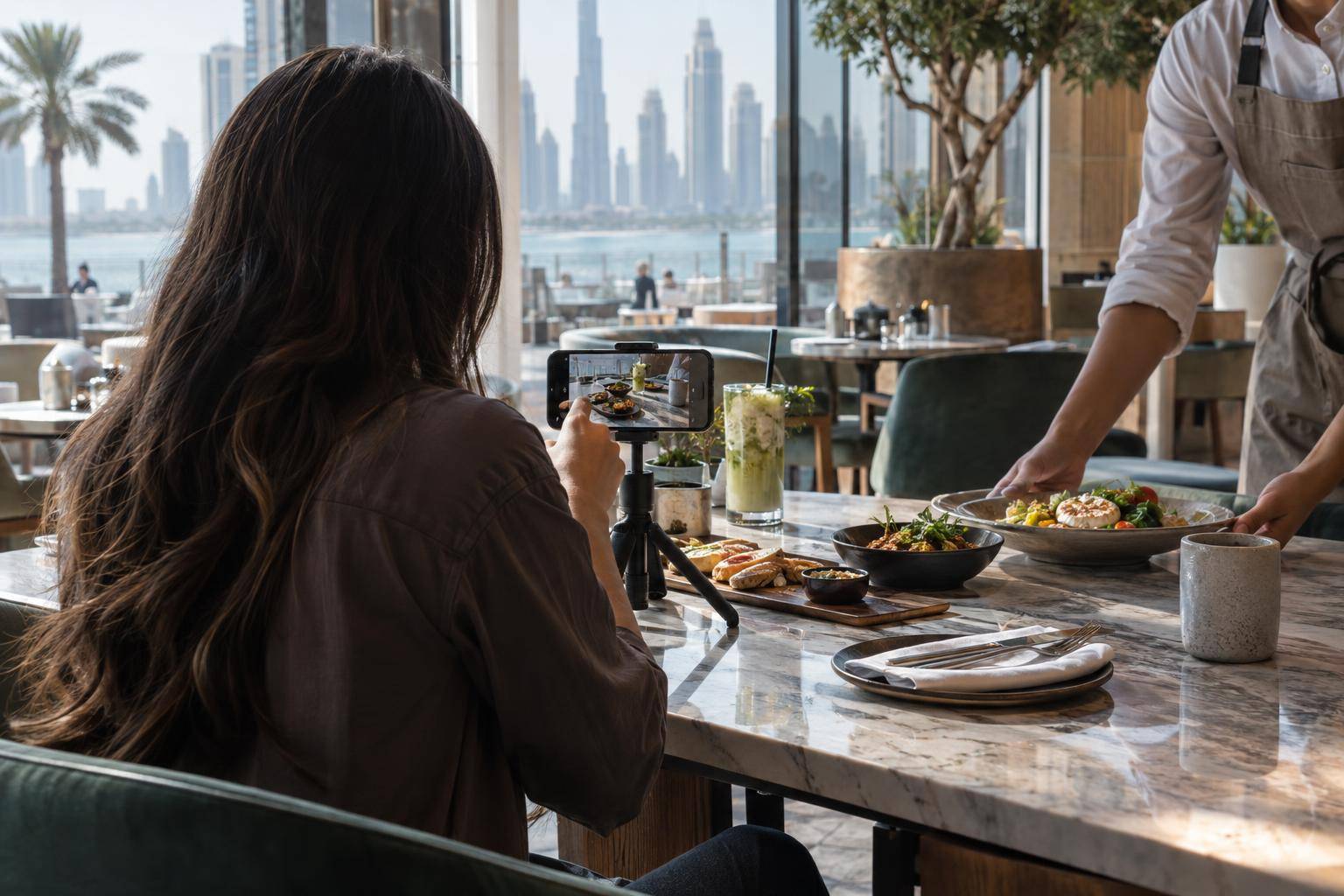
AIIMS Group’s 2026 UAE influencer marketing study, authored by Hiba Nadeem, describes a market increasingly focused on commercial results rather than follower totals. For Dubai creators and venues, its findings highlight the role of smaller audiences, platform selection and audience authenticity in planning Collabs.
- The study cites an estimate placing the UAE influencer marketing market above USD 620 million in 2026.
- Its creator benchmarks put micro-influencer engagement at 3% to 8%, compared with under 1% for mega and celebrity accounts.
- Food and hospitality are identified as categories where micro-creator campaigns can generate strong footfall results.
- Pricing, audience checks and measurable campaign goals are central to the report’s approach to creator selection.
Quick summary
AIIMS Group’s study presents UAE influencer marketing as a commercial channel that should be assessed through audience quality and business outcomes. It brings together market estimates, engagement benchmarks, creator pricing and platform guidance rather than treating visibility alone as a measure of success.
Among the figures it cites is GIMA’s estimate that the UAE market will exceed USD 620 million in 2026. It also reports that more than 92% of UAE brands use influencer marketing within their digital strategies. These are figures presented in the study, not independent measurements by Fleek Dubai, and its pricing tables are benchmarks rather than guaranteed campaign costs.
Smaller audiences take a bigger role
The clearest theme is the changing relationship between audience size and engagement. The study’s tier comparison places micro-creators, defined as those with 10,000 to 100,000 followers, at engagement rates of 3% to 8%. Macro-creators sit at 1% to 3%, while mega and celebrity accounts are below 1%.
Separately, it cites HypeAuditor data showing that average engagement for UAE Instagram accounts above one million followers fell from 3.2% in 2020 to under 1% in 2025. The implication for Collabs is not that large creators have no role. Rather, follower totals alone do not explain how actively an audience responds, making engagement an important part of selection.
Why it matters for Dubai
For Dubai venues, the study’s food and hospitality findings are particularly relevant. It identifies Instagram, TikTok and Snapchat as important platforms for the category and describes strong footfall returns from micro-creator campaigns. That connects creator activity to visits, rather than simply to the number of people who see a post.
Its local-awareness example, aimed at a new café or boutique, pairs eight to ten nano-creators with Instagram and TikTok, with an estimated campaign budget of AED 10,000 to AED 25,000. This is a planning benchmark, not a requirement for every venue. It illustrates the report’s approach of spreading a campaign across several smaller creators rather than relying entirely on one prominent account.
Choosing platforms around the content
The report assigns different jobs to different platforms. Instagram is positioned strongly for lifestyle, beauty, fashion and luxury, with Reels and collaborative posts identified as its highest-performing formats in 2026. TikTok is described as a discovery platform for people aged 18 to 35.
YouTube’s role is more closely tied to detailed reviews, tutorials and brand storytelling, particularly where a purchase takes more consideration. Snapchat is highlighted for its relevance to Emirati audiences and Ramadan content, while LinkedIn is associated with business-focused influence and founder profiles. For Dubai Collabs, this distinction supports matching the platform to the audience and content, rather than assuming every channel serves the same purpose.
What it means for creators and venues
The pricing tables make format and creator tier important starting points for campaign planning. The study lists Instagram sponsored posts from nano-creators at AED 300 to AED 2,000, with nano Reels at AED 500 to AED 2,000. For micro-creators, the corresponding ranges are AED 2,000 to AED 10,000 per post and AED 3,000 to AED 12,000 per Reel.
It also puts comparable TikTok rates 20% to 40% below Instagram. These ranges give creators and venues a reference for discussing paid Collabs, not a universal rate card. Alongside pricing, the study separates local awareness from lead generation and bookings, reinforcing the importance of deciding what a campaign is intended to achieve before choosing its creator mix.
Audience checks belong alongside pricing
The study also flags a significant qualification to engagement figures: not all activity is authentic. It cites a 2025 HypeAuditor analysis indicating that approximately 45% of UAE Instagram influencers had audiences with significant inauthentic engagement. It separately notes industry estimates that bots or engagement pods account for up to 25% of engagement on some regional accounts.
Those findings should not be read as an allegation against any individual creator. They explain why the report includes audience-authenticity tools in its selection framework. For Dubai venues comparing Collabs, the broader lesson is to examine audience quality alongside reach, price and engagement. For creators, the same emphasis puts genuine audience response at the centre of their commercial value.
FAQs
What does the study estimate the UAE market is worth?
It cites a GIMA estimate of more than USD 620 million for UAE influencer marketing in 2026.
How does the study define micro-creators?
Its tier table defines them as creators with 10,000 to 100,000 followers, with engagement benchmarks of 3% to 8%.
Which platforms are highlighted for hospitality?
The study identifies Instagram, TikTok and Snapchat as platform strengths for food and hospitality creators.
Are the listed campaign prices fixed?
No. The source presents estimated budgets and pricing benchmarks, rather than fixed prices for individual Collabs.
Source: aiims.group. Image is an illustration.